In-office screening
AquaDENTALNOW
In-office dental water screening without the extra steps.
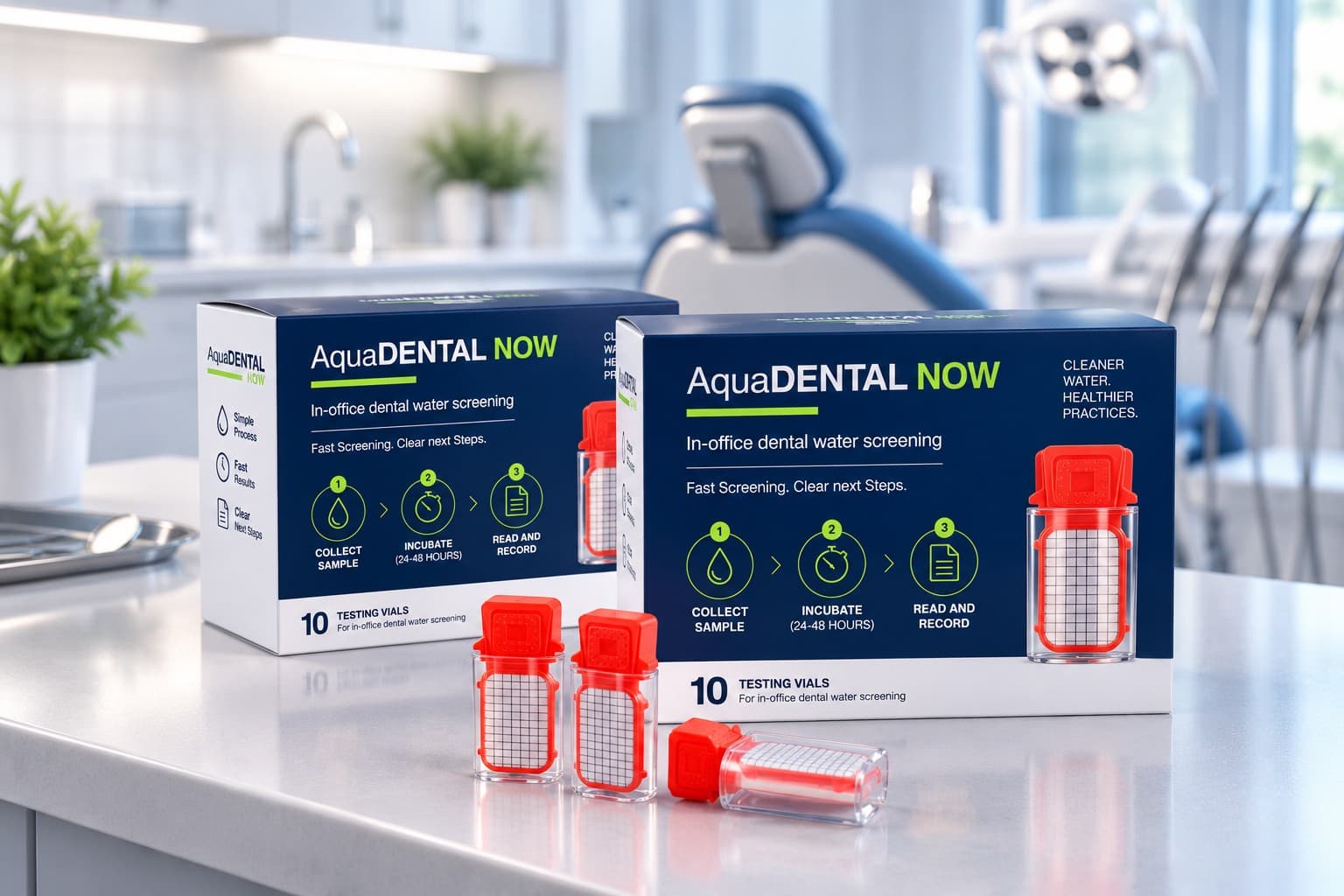
AquaDENTAL NOW gives you a simple way to screen your dental unit waterlines directly in the practice and see where microbial levels fall within defined CFU ranges.
A simple way to check your waterlines right in the practice, without sending samples to a laboratory.
Sample. Screen. Document.
Collect your sample, perform the test according to the instructions, and read the result.
How to sample my dental water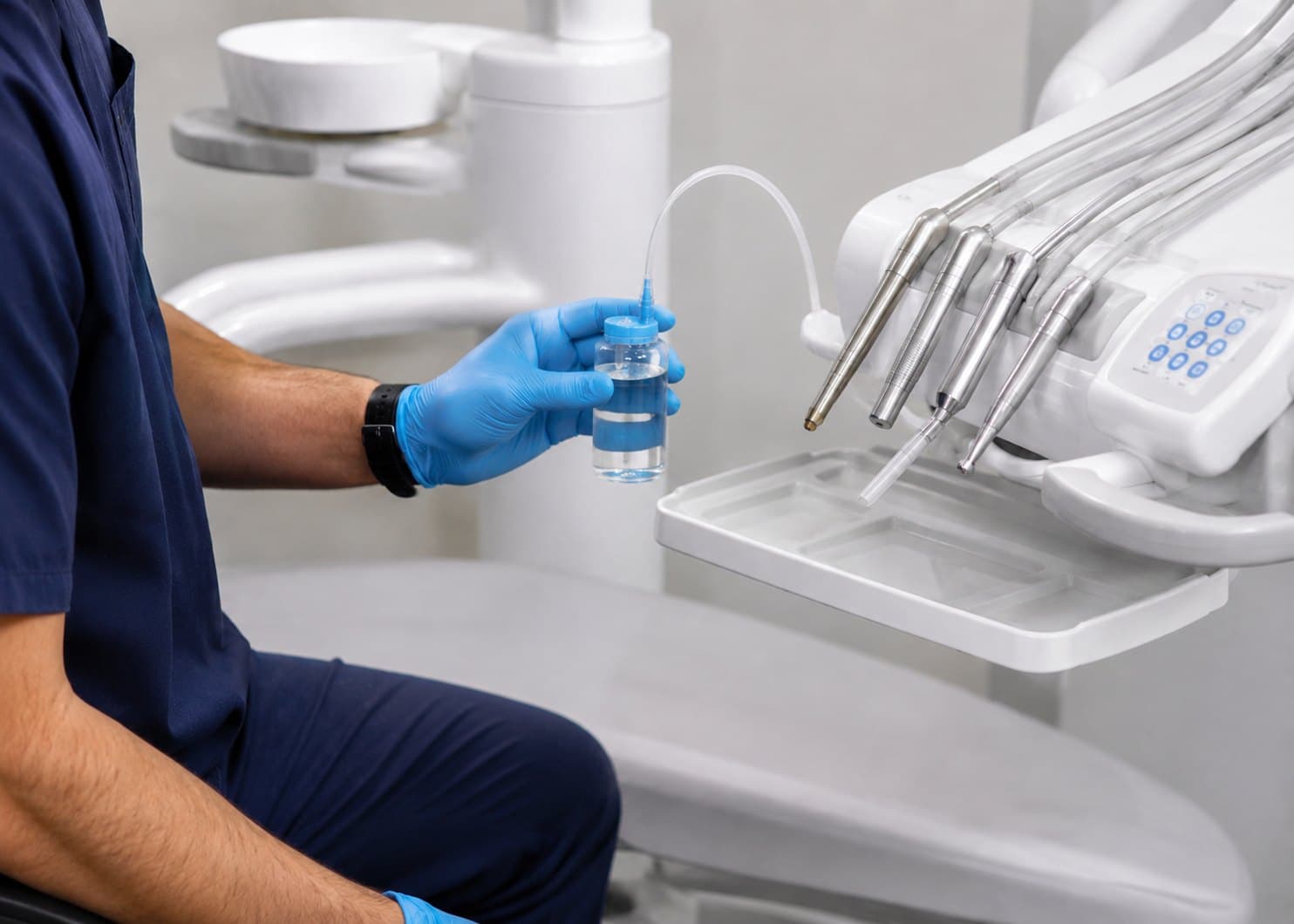
Results are presented as defined microbial ranges rather than leaving your team to interpret complicated laboratory data.
Download your testing log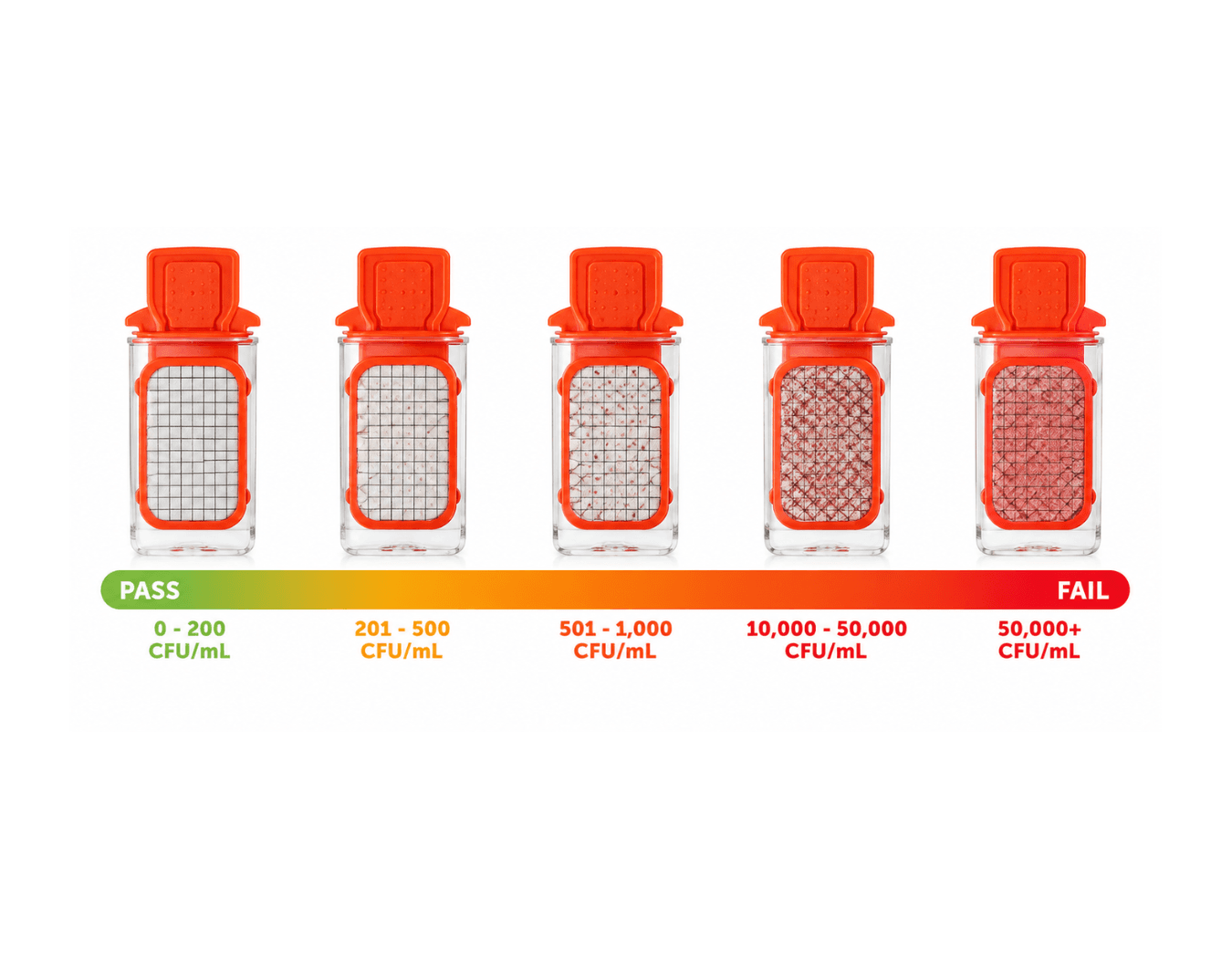
Set your schedule. We'll send the tests. Save 5% along the way.
Record your results by operatory and maintain a clear testing history with AquaIRIS, our digital reporting platform.
Learn more about AquaIRIS
Test directly in your practice and avoid the added logistics of sending samples to a lab.
Keep testing supplies on hand for convenient, repeatable monitoring.
Defined CFU/mL ranges make it easier to understand results and identify when a waterline may need attention.
Get visibility into your water quality without waiting for laboratory turnaround.
A straightforward testing process designed to fit into the dental office workflow.
In-office screening
In-office screening
In-office screening

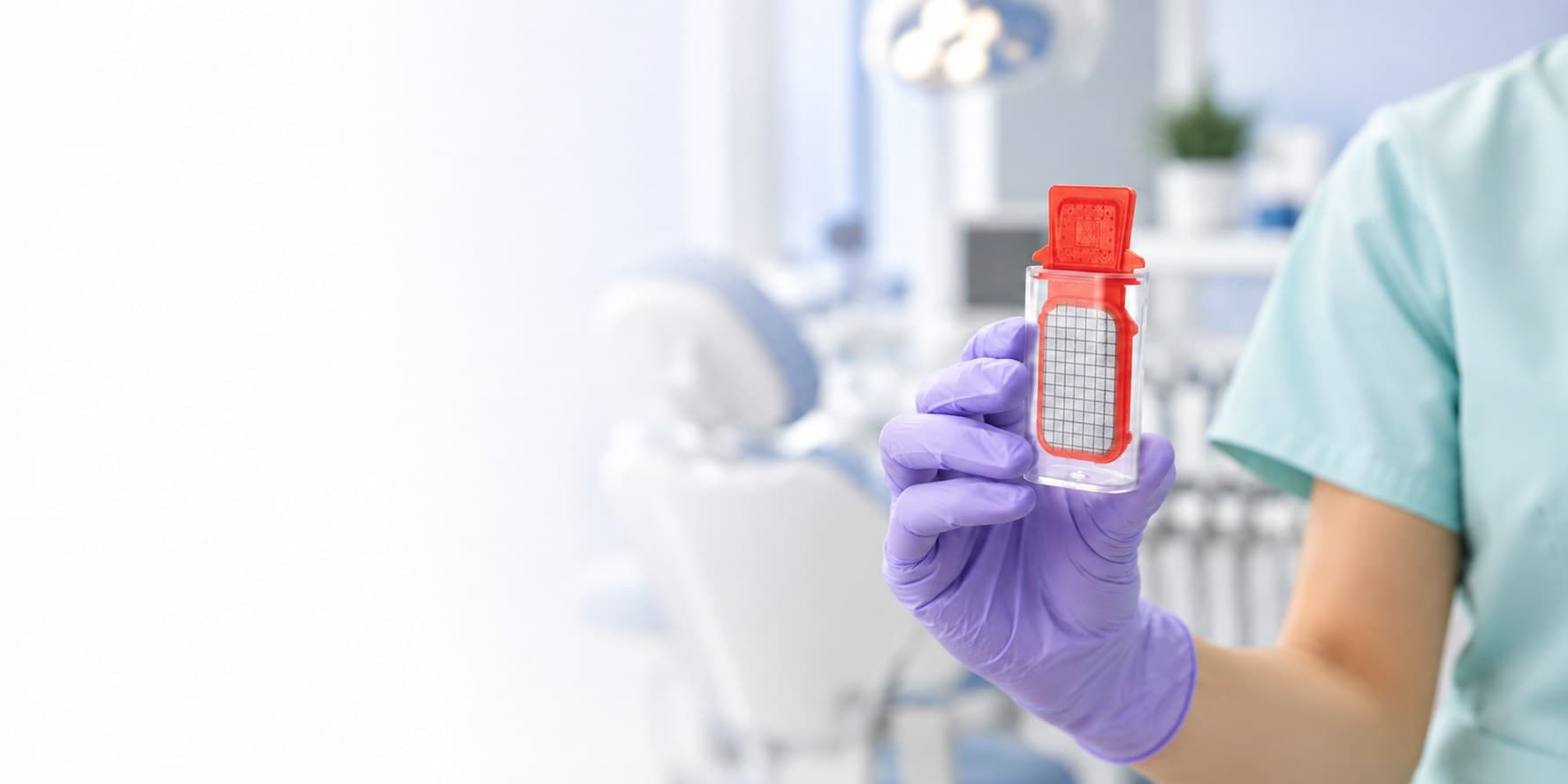
You collect a small water sample from the dental unit waterline you want to check, apply it to the AquaDENTAL NOW tester according to the step-by-step instructions, and let it incubate. After the incubation period you read the result against the defined CFU/mL ranges on the reading guide, then record it for your practice's testing log or in AquaIRIS.
Testers are read after incubation, typically 24 to 48 hours at room temperature as described in the kit instructions. Reading too early can under-estimate growth, so follow the timing printed in your instructions and note the read time on your log.
CFU/mL stands for colony-forming units per milliliter and is the standard way of expressing the number of culturable heterotrophic bacteria in a water sample. For routine nonsurgical dental treatment water, CDC recommends meeting the EPA drinking-water standard of ≤500 CFU/mL. AquaDENTAL NOW presents results as defined ranges so your team can quickly see whether a waterline falls within or above that benchmark.
Each dental unit has its own waterlines, and biofilm can develop independently in each one, so monitoring every unit that delivers treatment water gives you the clearest picture. CDC recommends consulting the dental-unit and water-treatment-product manufacturers for appropriate monitoring methods and frequency. Many practices test every operatory on a routine schedule and retest individual units when a result is elevated or after maintenance.
Pooling (combining water from several lines into one sample) can hide an individual line with high counts, because the other lines dilute it. For that reason most guidance recommends sampling each waterline or device separately. If you do pool samples for convenience, an elevated result should be followed by individual testing to identify the source.
Yes. Treatment products (tablets, cartridges, straws, shock treatments) are designed to control biofilm, but testing is how you verify that the product and your maintenance routine are actually working. Monitoring lets you confirm results, document them, and catch changes before they become a problem.
AquaDENTAL NOW is a screening test that reports results as defined CFU/mL ranges, which is well suited for routine monitoring and for deciding whether a waterline needs attention. When you need a specific numeric result from an accredited laboratory, for example to investigate an elevated screening result or to build a formal record, AquaDENTAL LAB provides SM 9215C R2A heterotrophic plate count analysis.